

Insurance Claim Guide
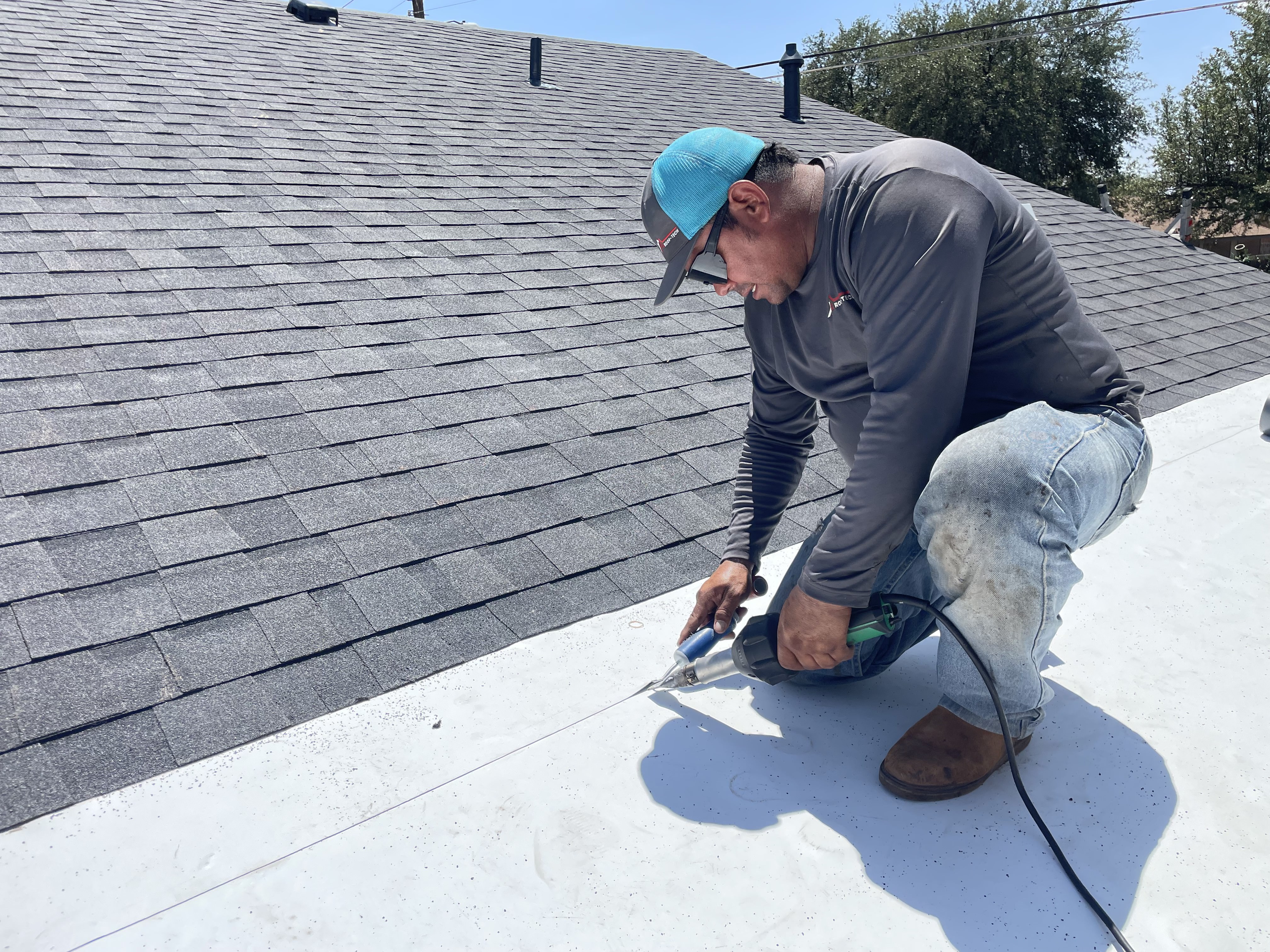
Roof-Tech offers thorough roof inspections for both commercial and residential properties. The inspection is conducted by a highly trained project manager who will identify any damage or leaks within the roof and can provide next steps on how to address any potential issues.
Please submit this form to get started!
Insurance Claim Guide for Roof Replacement in West Texas
If a hailstorm, high winds, or another covered event has damaged your roof, your homeowner's insurance policy almost certainly pays for the repair — or in many cases the full roof replacement. The catch: the claim has to be filed correctly, documented well, and worked through the adjuster process in the right order. This guide walks you through every step the way Roof-Tech walks every West Texas homeowner through it.
1. Confirm the damage is worth filing for
Filing a claim makes sense when the damage is bigger than your deductible AND the cause is something your policy covers (hail, wind, falling debris, fire). A few popped shingles after one storm probably isn't worth eating a deductible — but hail bruising across the whole roof, missing shingles after a storm, or a tree limb through the deck always is. Call Roof-Tech for a free post-storm inspection BEFORE you file; we'll tell you straight whether a claim is the right move.
2. Document everything — photos, video, dates
Adjusters work from evidence. The more you have, the smoother the claim goes:
- Photos of the damage from the ground AND from above. Drone shots (we offer drone roof inspections as a free service) give you the clearest documentation.
- Date and time of the storm event. Pull a copy of the local weather report if you can — NWS records, hail-size maps, even local-news clips help.
- Photos of interior damage — water stains on ceilings, peeling paint, attic moisture, anything that ties roof damage to interior loss.
- Receipts for any temporary repairs (tarps, plywood) you put up to prevent further damage. Your policy reimburses these.
3. Read your policy before you call
Open your declarations page and look up three numbers: your deductible, your roof coverage type (Replacement Cost Value vs. Actual Cash Value), and any wind/hail deductible separate from the general one. RCV pays the full cost of a new roof; ACV depreciates the payout based on age. If your roof is over 15 years old and you have ACV coverage, the depreciation can be steep — call us and we'll walk you through what that math looks like for your roof specifically.
4. File the claim
Call your insurance company's claims line — every major carrier (State Farm, Allstate, Farmers, USAA, Liberty Mutual, etc.) has a 24/7 number. Give them the storm date, a description of the damage, and your contact info. They'll assign you a claim number — write it down, you'll quote it on every call after this. The carrier will then schedule an adjuster to come inspect the roof in person, usually within 7–14 days.
5. Have a roofer on-site for the adjuster meeting
This is the single most important step in the whole process. The adjuster's job is to scope the damage and price the repair. If you're there alone, the scope they write IS the scope your claim pays. If a Roof-Tech estimator is on-site with you, we walk the roof with the adjuster, point out every dent, missing shingle, lifted flashing, and damaged accessory (vent boots, drip edge, gutters), and make sure nothing gets missed. Call us BEFORE the adjuster arrives — (806) 853-5199 for Lubbock, (432) 400-5310 for Midland, (432) 888-7435 for Odessa, (575) 552-8883 for Hobbs, (575) 530-5550 for Clovis — and we'll send someone for free.
6. Get the adjuster's scope and the carrier's payment
A few days after the meeting, the carrier sends you a scope of loss (an itemized estimate) and an ACV check (the depreciated payment). The scope is your blueprint — every line item on it is what the insurance will pay for. If the scope is missing damage we documented, this is when we file a supplement — a formal addition request backed by photos and our own measurement. Most claims need at least one supplement; we handle the back-and-forth so you don't have to.
7. Roof goes in. Final payment comes after.
Once the scope is accepted and any supplements are approved, Roof-Tech installs the new roof to the spec the carrier paid for — same shingle grade, same accessories, same upgrades you requested. When the job is done we send the carrier the final invoice and a certificate of completion, and they release the recoverable depreciation (the difference between the ACV check you got up front and the full Replacement Cost). That second check is the rest of what the roof costs. You write us one check for your deductible — the carrier pays the rest.
What Roof-Tech handles for you
- Free pre-claim roof inspection (drone or in-person) so you know whether a claim is worth filing.
- Free adjuster meeting — we're on-site with you to make sure nothing gets undercounted.
- Photo + video documentation of every damage point, with a written report you can hand to the adjuster.
- Supplement filing if the carrier's scope misses damage we documented.
- Code-upgrade negotiation (most carriers pay for code-required upgrades on a re-roof — drip edge, ice-and-water shield, etc.).
- Direct invoicing to the carrier so you only ever write one check (your deductible).
- The actual roof replacement — handled by a Roof-Tech project manager from estimate through final cleanup.
Common questions
Will filing a claim raise my premiums? A single weather-related claim usually doesn't — every carrier and every state handles this differently, but hail/wind claims in Texas and New Mexico typically do not push your rate. Repeated claims do. Ask your agent if you're unsure.
How long do I have to file after a storm? Most policies give you 12 months from the date of damage, though some are shorter. File as soon as you spot damage — proving the damage came from a specific storm gets harder the longer you wait.
Can I use any roofer the carrier suggests? Texas and New Mexico both let you choose your own contractor. The carrier may have a "preferred" list, but you are not required to use them. Your policy pays the same regardless.
What if the carrier denies the claim? Denials happen. They usually come down to "damage was pre-existing" or "wear and tear, not storm damage." If we documented the damage and you have storm-date records, you have grounds to appeal. We've helped homeowners turn over denials with supplement filings + supporting docs.
Schedule a free roof inspection today
If a recent storm hit your area, get an inspection on the books before you file. Call (806) 853-5199 for Lubbock, (432) 400-5310 for Midland, (432) 888-7435 for Odessa, (575) 552-8883 for Hobbs, (575) 530-5550 for Clovis, or request an inspection online — most appointments happen within 48 hours.